
Online Product Catalog
Featuring reverse osmosis, countertop water filters, undersink filters, shower filters, ultraviolet purifiers, water filter replacement cartridges, gravity emergency filters, dry pellet chlorinators, Doulton ceramic filters, aeration systems for iron and hydrogen sulfide removal, compact whole house filters, multi-cartridge stainless-steel filtration units, chemical feeder systems, hydrogen peroxide feeders, backwashing filters, water softeners, garden hose filters, sediment filters, carbon block filters, KDF cartridges, pumps, and much, much more. From top makers like MatriKX, Flowmatic, Omnipure, Pura, Sprite, Wellpro, Fleck, Alamo, Watts, Stenner, AERMAX, & Doulton, as well as our own tough & reliable Black & White Reverse Osmosis series of drinking water systems.
Main Product Menu
Browse the main categories below, or go to the simple alphabetical product listing.
| Garden Hose Filters. Another unique and much-needed item, our garden hose filters allow you to water your flowers or fill your pet’s bowl with chlorine free water, neutralize low-pH water for your plants, keep the chlorine out of your fish pond, or do many more useful things. Easy and inexpensive. Includes everything you need. |
 |
1 |
|
Countertop Water Filters.
Our classic Model 77, the world’s greatest $77 water filter, is the only water filter we know
of that has an unconditional lifetime guarantee. Several styles and many cartridge options are available. This is a sturdy, effective water filter that installs in
a jiffy (or less) and lasts a lifetime. Parts for Countertop Water Filters.
|

|
2 |
| Double Countertop Water Filters. Doubles have the advantage of increased filtration capacity and greater variety. We have several styles and many cartridges to choose from. These have the same lifetime guarantee as our Model 77 countertops. |

|
3 |
|
Undersink Filters.
Single, double, and triple filters, our new compact triple unit, and even a quadruple filter. Several vessel styles, many filter cartridges, and long guarantees. These are tough, reliable performers. For standard undersink units with inlet valve
and their own ledge faucet, click on the picture or title link. For simple undersink
units that filter all water that comes from your present cold water faucet, click here.
A Unique Product. Take a look at our new Enhanced Performance Undersink Fluoride Removal Filter. |
 |
4 |
| Countertop Reverse Osmosis. Two styles of ugly but effective, easy-to-use reverse osmosis units. No permanent attachment to your plumbing is required. Low cost for lots of great water. If you don’t see a style you want, we’ll build to your specifications. | 
|
5 |
|
Undersink Reverse Osmosis.
The link at right will take you to our reverse osmosis entry page, where you’ll find basic pictures and details about our several fine undersink styles. These include our own brand, the classic Black & White unit that we’ll customize to your needs, our easy-to-service Q Series
units, a superb economy unit (twice as good as the “big box store” units at a comparable price), and much, much more.
Need a part for your reverse osmosis unit? Go here. Reverse Osmosis Membranes are here. |

|
6 |
| Whole House, Light Commercial Reverse Osmosis. Reverse Osmosis for point of entry. From 300 gallons per day to 12,000. Superb factory-ready systems with all the usual accessories factory installed. |
 |
7 |
|
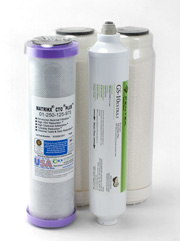
Filter Cartridges. We stock a large selection of the most popular sizes, featuring MatriKX extruded carbon blocks and Di-Tech-style specialty cartridges. Also, Doulton
ceramics, Omnipure Q and K series, Gold Series Inlines, filters
for Microline and Hydrotech units and much more. Reverse Osmosis Membranes are also listed in this section. |
 |
8 |
| Emergency Filters. Doulton performance for as low as $45. Take a look at our very simple but totally effective siphon filters that will make puddle water drinkable in emergencies. |
 |
9 |
|
Shower Filters. We’ve got
Sprite—the best we can find—and we sell only styles with replaceable
cartridges. The Sprite “High Output” is the best seller, but we have the
Hand Held version as well. Great prices on both filters and cartridges. We also have Vitabath© Vitamin C dechlorinating bath tablets for baths, hot tubs, and spas. Go here for details. |
 |
10 |
|
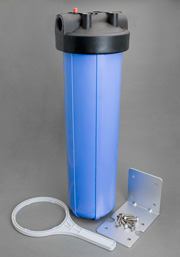
Compact Whole House Filters. These inexpensive, compact cartridge-style units provide efficient removal of chlorine from city water with little pressure drop and serve a variety of purposes
for wells. If the basic units don't suit your needs, we can customize.
For the 20" Unit (the most popular for whole house use), go here. For the 10" Unit, go here. For the small diameter 20" unit, go here. |
 |
11 |
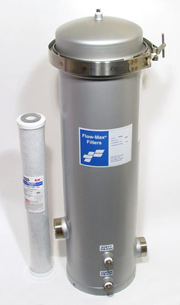
| Stainless Steel Whole House Unit. Our Model 42 all stainless steel whole house filter, generously sized for standard residential and light commercial applications. This is a four-cartridge unit that’s easy to install and easy to service. |
 |
12 |
| Big Bubba Heavy Duty Whole House Unit. Big Bubba is the roughest, toughest, and certainly the biggest cartridge-style whole house filter on the market. It has phenomenal capacity for chlorine reduction with a carbon block cartridge, and up to 150 gallons per minute flow rate as a sediment filter. Big Bubba is simple to install, easy to maintain, beautiful to contemplate. We stock all parts and cartridge options. |
 |
13 |
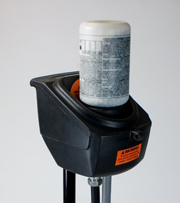
| Well-Pro Dry Pellet Chlorinator easily solves iron, hydrogen sulfide, and bacteria problems in wells without the hassle and danger of liquid chlorine. We sell the units and we sell the pellets. |
 |
14 |
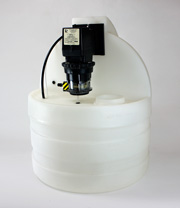
| Feeder Systems. Chemical Feed Pumps, Solution Tanks, Retention Tanks, Hydrogen Peroxide, Soda Ash, Static Mixers, Iron Removal and Sequestering Agents, and more. To treat iron and manganese, low pH, bacterial contamination, hydrogen sulfide (rotten egg smell), iron-stained driveways and buildings, and more. We stock and recommend Stenner peristaltic pumps, but we can supply other styles and brands on request. |
 |
15 |
|
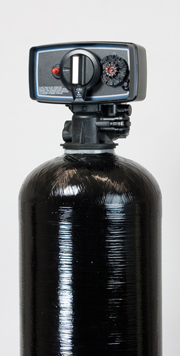
Large Filters and Softeners. Filters for removing chlorine from city tap water, for removing iron and hydrogen sulfide from well water, for removing excess sediment—and more. Simple, effective yet inexpensive softeners, all made with standard industry parts from Fleck, Structural Fibers, and other top makers.
If you don't see what you want, please call or email. We can supply
virtually any style or size of softener or backwashing filter. Go here for Large Backwashing Filters.
New: Our Whole House Unit for Chloramine
Removal. Go here for our Scalenet Water Softener Alternative systems.
High flow sediment removal Sand Trap Filters Our new Filox filters for iron and hydrogen sulfide.
|
 |
16 |
|
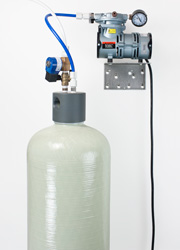
Air Injection Systems for Iron/Manganese and Hydrogen Sulfide Removal. We have
Aer Max™
aeration systems with many options that we've added for highly effective,
chemical-free treatment of well water. We carry replacement air pumps and parts on our aeration parts page. |
 |
17 |
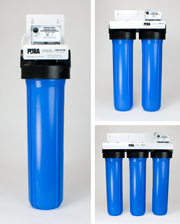
| Pura Ultraviolet Systems Pura ultraviolet units to rid water of bacteria. Many sizes—from an undersink add-on drinking water unit to the “Big Boy” series, capable of handling industrial applications. Ultraviolet keeps the chemicals out of your well water and out of the environment. It’s the cleanest and easiest way to get rid of bacteria in water. |
|
18 |
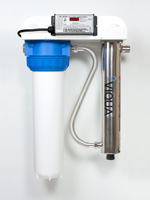
| VIQUA Ultraviolet Systems UV disinfection systems manufactured by VIQUA. Undersink and whole house units featuring stainless steel reaction chambers, high dosage UV lamps, a wide range of top quality accessories and industry leading build quality. |
|
19 |
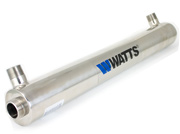
| Watts Ultraviolet Systems High quality stainless steel ultraviolet units. Simple to install and service, Watts UV units provide an affordable and effective option for safe, chemical free disinfection of microorganisms. |
|
20 |
|
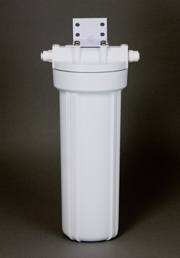
Add-on Filters. Unique to our site, this very useful page allows you to make easy and inexpensive additions to your existing filtration system. Add fluoride removal, sediment reduction, lead removal,
for example, or simply increase the capacity of your drinking water filter
by adding an extra stage of carbon. |
 |
21 |
| Quick Connect Fittings. The convenient and popular John Guest™, and long-lasting Mur-Lok™ tube fittings in sizes to fit your water filter or aid you in adding another. (We also have Jaco™ fittings, but you'll have to call and ask about them.) |
 |
22 |
Installation, Maintenance Information, & Product Warranties
Information About Water Treatment
Like most things in life, this page is continually in progress. If you don’t find what you want today, please come back tomorrow.
And don’t hesitate to call about product alterations and substitutions. We like custom-making water treatment systems to your needs. And if we don’t have it, we can usually find it.
We welcome telephone orders and will be pleased to help with selection. If we miss your call, please leave a message we’ll return your call promptly. And we also try to answer email as promptly as possible.

Pure Water Products, LLC
Phone : (888) 382-3814
Email : pwp@purewaterproducts.com
Site Index
Filtration Systems
- Aeration for Iron & Sulfide
- Backwashing Filters
(whole house & well units)
- Chlorine & Chemical Injectors
- Countertop Water Filters
- Emergency Filters
- Garden Hose Filters
- Reverse Osmosis, Residential
- Reverse Osmosis, Commercial
- Shower Filters
- Specialty Filters
- Ultraviolet Systems
- Undersink Filters
- Water Softeners
- Whole House Filters
Cartridges
Parts
- Replacement Parts
- Faucets
- Filter Media
- Fittings
- Housings
- O-rings
- Pumps
- Pura UV
- R.O. Parts
- R.O. Tanks
- R.O. Booster Pump
- VIQUA UV